How we farm
Everything on this page is a decision we made deliberately — and can show you the reasoning for.
The system
Every apple tree is actually two plants: a fruiting variety grafted onto a rootstock that controls how the tree grows. M9 is a dwarfing rootstock — it keeps trees small, so they can be planted close together in tight rows, like a vineyard.
Small trees change everything. They fruit in their second or third year instead of their seventh. Every branch is reachable from the ground, so pruning, thinning, spraying, and picking are precise instead of approximate. Sunlight reaches every apple, which means better color and more even ripening.
It's the system behind the world's best apple regions — and increasingly, behind the best new orchards in Kashmir.
The site
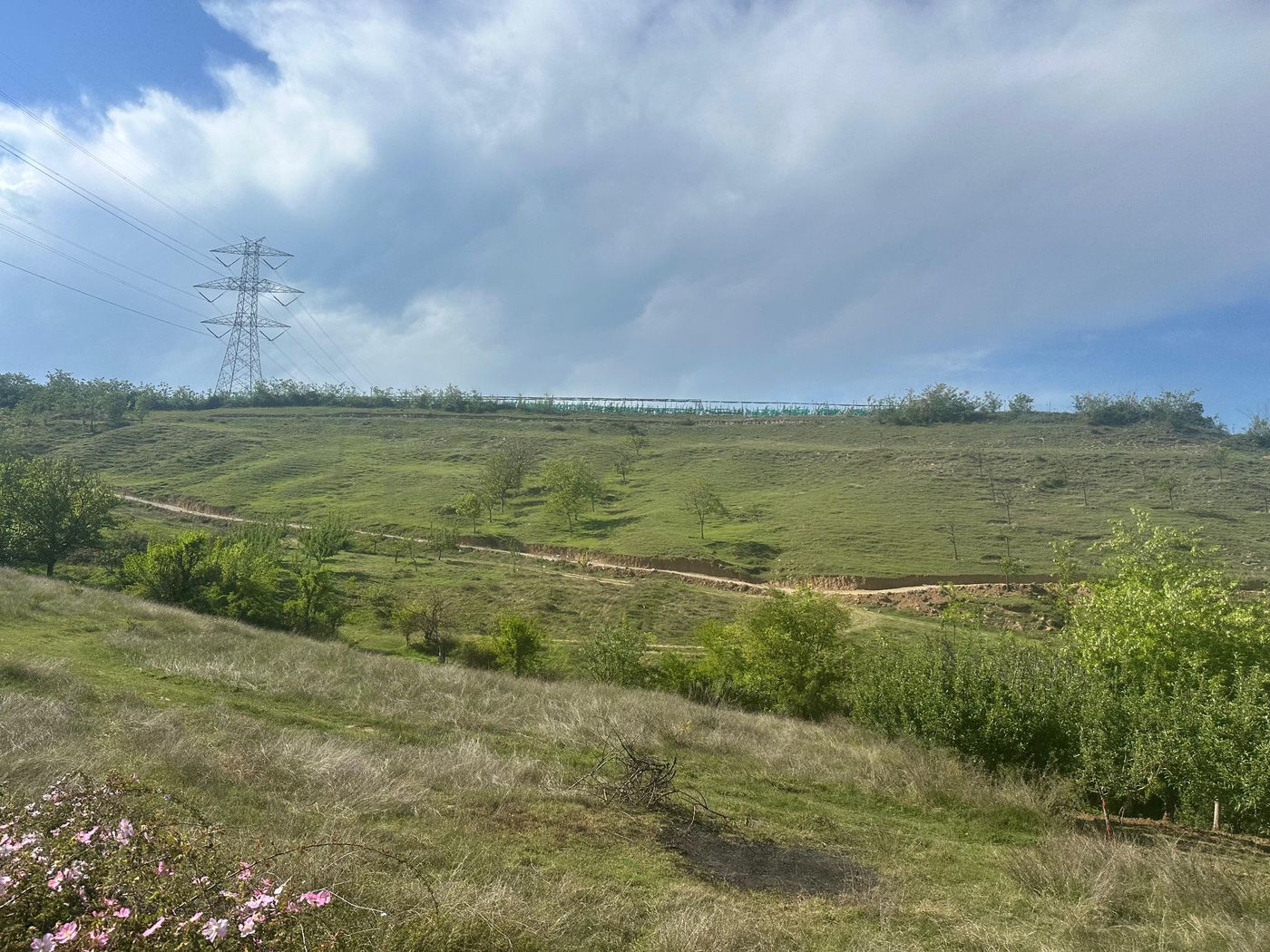
Highland Orchard sits near Pattan, Baramulla district — the heart of North Kashmir's apple belt. The estate is made up of two adjoining orchard blocks, North and South, with a combined secured perimeter of roughly 665 metres.
The perimeter is being enclosed with chain-link fencing topped with high-coverage privacy netting — protection for young trees against stray cattle and casual intrusion, and a controlled environment from day one.
North Orchard on Google Maps →
South Orchard on Google Maps →
Water & infrastructure
High-density orchards on M9 rootstock have shallow roots — they are productive precisely because they put energy into fruit instead of deep root systems. The trade-off: they cannot survive on rainfall alone. Water isn't a detail in this system; it's the foundation.
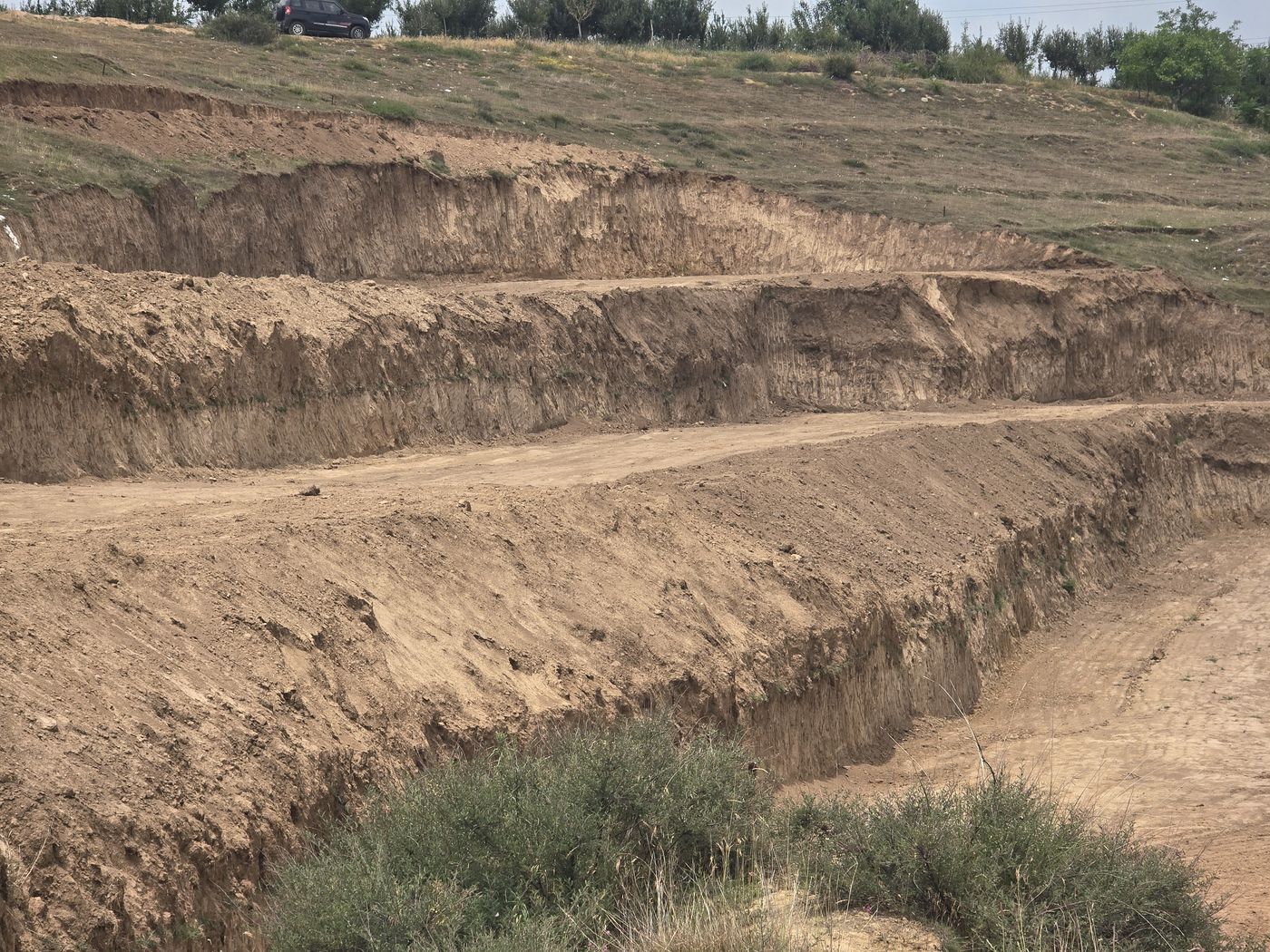
So the first structures at Highland Orchard aren't sheds or gates — they are two reinforced-concrete (RCC) water storage tanks, sized for the orchard at full planting, plus a 500 sq ft keeper's unit so the orchard is looked after year-round, on site.
Irrigation lines will run from storage to every row before the trees go in. When planting starts, water is already a solved problem.
Planting material
The quiet risk in Kashmir's high-density boom is planting material. Saplings sold as "imported M9" are everywhere; paperwork proving it is rare. Plant the wrong material and you discover the mistake three years later — when it's too late.
Our sourcing rule is simple: certification beats origin stories. Every batch of planting material is verified through SKUAST-K (Kashmir's agricultural university) and the government horticulture network before it goes anywhere near our soil. If the paper trail isn't clean, the trees don't come in — whatever the seller promises.
It's slower and stricter than the usual way. It's also the only way to promise, years from now, that every apple from Highland Orchard traces back to legitimate genetics.
Standards & practices
As the orchard moves from infrastructure to trees to fruit, this is where we'll publish our working standards: spray and nutrition schedules, quality grading, harvest and post-harvest handling. Documented as we go — not written after the fact.